3 Tesla MRI Services

Our 3T MRI provides high-resolution and advanced functional imaging for clinical and research needs.
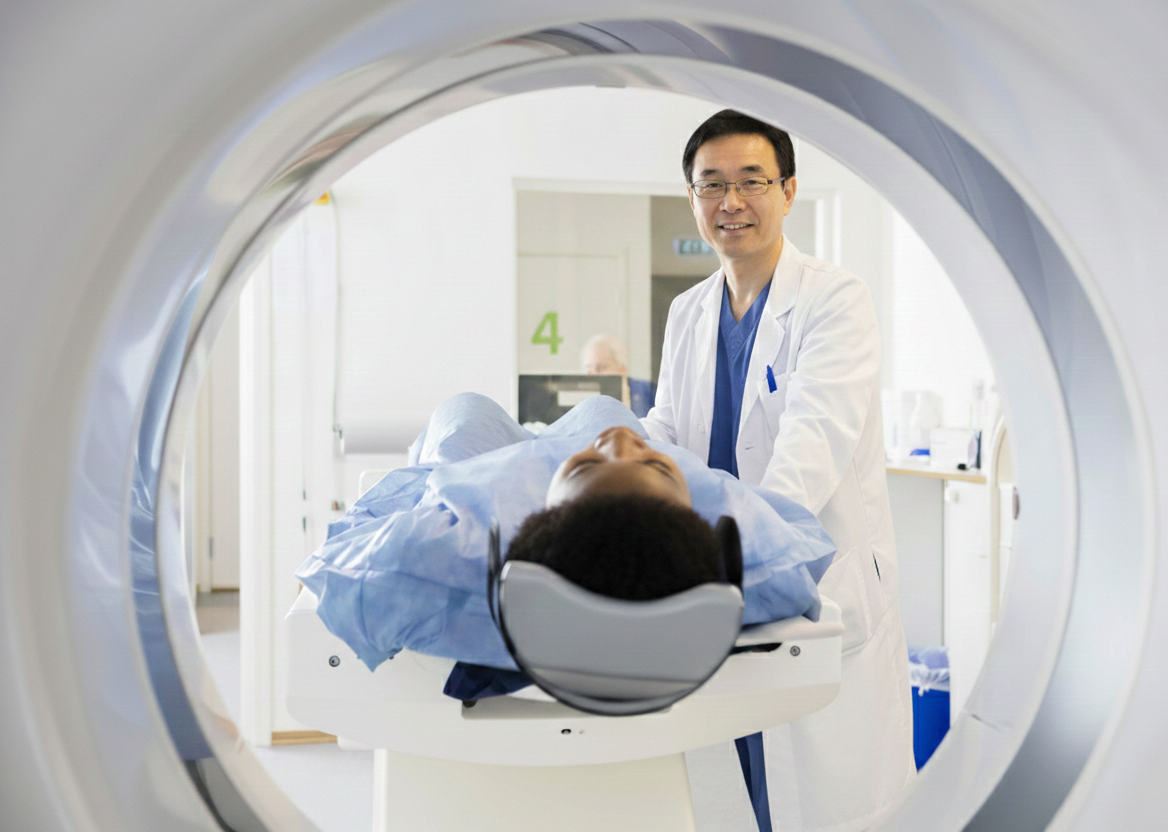
3 Tesla MRI scanner

Safety Questionnaire

Before your appointment you can review and listen to the MRI safety questions in multiple languages.

Go to Questions

What is an MRI?

Magnetic Resonance Imaging (MRI) is a non-invasive imaging technique that uses powerful magnetic fields and radio waves to produce highly detailed images of the body's internal structures. Unlike X-rays and CT scans, MRI does not use ionizing radiation, making it a safer option for many types of imaging. MRI is particularly useful for evaluating the brain, spinal cord, joints, soft tissues, and for advanced studies such as DTI (diffusion tensor imaging) and fMRI (functional MRI).

Available MRI Exams

We offer a comprehensive suite of MRI studies on our 3 Tesla scanner. Each protocol is tailored to provide the highest quality diagnostic information:

MR Angiography (MRA)

This protocol is used to visualize blood vessels and blood flow without requiring traditional invasive angiography.

Clinical Applications:

  • Aneurysms: Detecting weak or bulging spots in vessel walls.
  • Stenosis & Blockages: Identifying narrowing or obstructions in arteries.
  • Dissections: Finding tears within the layers of blood vessel walls.
  • Vascular Malformations: Evaluating irregular connections between arteries and veins.

Functional MRI (fMRI)

fMRI is used to map brain activity by measuring changes in blood flow, revealing which areas of the brain are active during specific tasks or at rest.

Clinical Applications:

  • Pre-Surgical Mapping: Identifying critical functional areas (speech, motor, sensory) before brain surgery.
  • Stroke Recovery: Assessing how the brain functions or reorganizes after a stroke.
  • Neurodegenerative Disorders: Tracking functional changes in conditions like Alzheimer's or Parkinson's disease.

MR Spectroscopy (MRS)

This protocol measures chemical metabolism in tissues instead of just structure, providing biochemical information about tissue composition.

Clinical Applications:

  • Brain Tumors: Distinguishing between different types of tumors or grades of malignancy.
  • Metabolic Disorders: Detecting biochemical imbalances related to inherited or acquired conditions.
  • Radiation Necrosis: Differentiating between recurring cancer and tissue death from previous radiation treatment.

MR Arthrography

This protocol typically involves a contrast injection to provide high-definition images of joint interiors, enabling detailed visualization of cartilage and soft tissues.

Clinical Applications:

  • Labral Tears: Identifying tears in the cartilage of the shoulder or hip.
  • TFCC Tears: Detecting damage to the Triangular Fibrocartilage Complex in the wrist.
  • Joint Instability: Evaluating structural damage causing recurrent joint dislocations.
  • Loose Bodies: Finding fragments of bone or cartilage floating within a joint.

Diffusion Tensor Imaging (DTI)

DTI maps the brain's white matter tracts and neural connectivity, revealing the structural pathways that connect different brain regions.

Clinical Applications:

  • Traumatic Brain Injury (TBI): Detecting concussions and axonal damage missed by standard scans.
  • Surgical Planning: Protecting critical neural pathways during tumor removal.
  • Neurodegeneration: Early tracking of Alzheimer's disease and multiple sclerosis (MS).

Cardiac MRI

The gold standard for evaluating heart structure, muscle viability, and cardiac function with precise anatomic detail.

Clinical Applications:

  • Myocardial Damage: Identifying scarring from previous heart attacks.
  • Cardiomyopathies: Diagnosing thickened or weakened heart muscles.
  • Congenital Defects: Assessing heart abnormalities present from birth.

Body MRI

Comprehensive screening of internal organs and soft tissues without ionizing radiation, providing exceptional soft tissue contrast.

Clinical Applications:

  • Early Cancer Detection: Finding tumors in the liver, kidneys, pancreas, and reproductive organs.
  • Organ Disease: Identifying fatty liver, cirrhosis, and inflammatory bowel conditions.
  • Aortic Assessment: Detecting abdominal or thoracic aneurysms.

Structural 3T MRI

High-resolution anatomic imaging for brain, spine, and body—the foundation of all our MRI protocols.

Disclaimer: This information is for educational purposes only. Please consult a qualified medical professional for diagnosis or treatment recommendations.

Patient Preparation

  • Arrive 15-20 minutes early to complete registration.
  • Bring any prior imaging and the referring doctor's order.
  • Wear comfortable, metal-free clothing; remove jewelry, watches, hearing aids, and non-permanent dental work.
  • Notify staff if you have implants, pacemakers, aneurysm clips, cochlear implants, or any metal in the body.
  • If contrast (gadolinium) is required: inform us of allergies and kidney disease; fasting for 4 hours may be requested in some exams.
  • Pregnancy: notify the technologist if you are pregnant or suspect pregnancy.

Reports & Turnaround

All MRI exams are interpreted by our board-certified, sub-specialty fellowship-trained radiologists. Final reports are sent to the referring physician within 48 hours. Urgent findings are communicated immediately to the ordering provider.

Schedule an Appointment